


VIDEOS
Big Stories Made Reality
Senior Audiovisual Journalist | Investigative Journalist
National and International Impact Through Visual Storytelling.
Stories that begin in the territory and resonate beyond it, revealing how culture, memory, and collective action shape lasting social change.
A documentary series born from the voices and journeys that shape Colombia. Stories of resilience, identity, and everyday impact, told through intimate, human-centered film.
Social Prosperity, FUPAD, and Discovery Channel present Made in Colombia: Stories That Leave a Mark, a documentary that brings audiences into some of Colombia’s most remote and culturally rich regions to showcase the impact of national social inclusion programs.
The film follows community-led initiatives across the Sierra Nevada de Santa Marta, where Indigenous families strengthen their livelihoods through sustainable harvests; in Guapi, Cauca, where Afro-Colombian communities advance local development and cultural resilience; and in Montes de María, where the renowned Tejedoras de Mampuján use collective textile art as a powerful expression of memory, healing, and hope.
Through intimate testimonies and visually compelling storytelling, the documentary illustrates how government programs support communities affected by poverty and armed conflict, while elevating voices that are often absent from mainstream narratives.
Broadcast across Latin America and the United States on Discovery Channel, the film reached millions of viewers and helped broaden public understanding of displacement, resilience, cultural heritage, and inclusive growth.
Made in Colombia: Stories That Leave a Mark reflects years of collaboration between Prosperidad Social and its partners, demonstrating the power of documentary storytelling as a tool for public education, policy visibility, and long-term social impact.
Mental Health
Investigative Journalist | Director | Producer
When emotional distress becomes invisible, the consequences ripple quietly through families, communities, and the entire country. Mental Health explores a deepening crisis in Colombia, a reality that remains largely unspoken, affecting both adults and minors nationwide.
In a landscape of rising cases and systemic silence, the work of specialists becomes a vital lifeline. This film documents the urgent need for care and the profound human resilience required to confront a silent epidemic that many choose to ignore.
Health Across Borders
Investigative Journalist | Director | Producer
At the border, access to healthcare is the only thing standing between a migrant family and total collapse. Health Across Borders documents the raw reality of a survival exodus in Ipiales, Colombia, where those fleeing the Venezuelan crisis find their final line of defense in mobile medical units.
This film strips away the institutional veneer to expose the grit of life in motion. It is a testament to the resilience of families who, despite losing everything, fight to preserve their dignity and their health on one of the most hostile roads in the hemisphere.
Vichada: Bringing Health to Remote Communities
Investigative Journalist | Director | Producer
In the most isolated regions of Vichada, Colombia, healthcare depends on reaching the point where roads end and rivers begin. This film documents a journey into the heart of this vast department, where medical care is only possible by navigating the complex geography of indigenous territories.
Beyond the logistical challenges, the documentary captures the vital connection between specialists and communities that have long been invisible to the system, a testament to the resilience of those living at the edge of the map, and to the essential effort to bring care where it has never reached.
Breaking Frontiers from Ciudad Bolívar
Investigative Journalist | Director | Producer
In the hills of Ciudad Bolívar, Bogotá D.C., community health knowledge is more than just information. It is a tool for dignity and collective resilience. This film documents how Venezuelan and Colombian migrants are transforming their neighborhoods by becoming vital links in a survival network.
Beyond the classroom, the documentary captures the transition of participants into knowledge multipliers. It is a testament to the strength found in host communities, where training sessions foster trust and build lasting support systems in a landscape often defined by stigma and exclusion.

Wayúu and Displaced
Investigative Journalist | Director | Producer
Identity and survival collide in the story of María Cira, a Wayúu woman forced to flee the Venezuelan crisis only to face the harsh reality of displacement in Colombia. This profile explores the unique vulnerability of indigenous migrant women, capturing their struggle to preserve their heritage while navigating a landscape that often renders them invisible.
María Cira at the Americares Colombia clinic in Maicao, La Guajira.

Skarlett
Investigative Journalist | Director | Producer
For Skarlett, access to healthcare was not just about survival; it was about the right to be seen, respected, and treated with dignity. This profile follows the journey of a Venezuelan trans woman who migrated to Santa Marta, Colombia, navigating the dual challenges of a socioeconomic crisis and the search for a safe space to exist.
Until her passing in 2022, this story documents her resilience as she accessed vital medical and psychological support. Moving beyond a medical highlight, the film sheds light on the intersecting struggles of trans migrants in humanitarian settings, capturing a legacy of courage and the vital importance of care that honors the humanity of every individual.
Colombia Patient Highlight: Skarlett

Caminantes: Human Stories That Cross Borders
Director |Investigative Journalist | Producer
Across borders walked on foot, migration becomes a test of endurance, dignity, and the raw will to survive. Caminantes follows the harrowing journey of Venezuelan migrants who, driven by desperation and hope, flee their homeland on foot through treacherous terrain and armed conflict zones in search of a future.
Officially nominated at prestigious festivals including the Barcelona Human Rights Film Festival, the Los Angeles Latinx Film Festival, the Madrid Film Awards, and winner of Best Editing of a Documentary at the 2023 Madrid International Film Festival, the film has reached over 10 million viewers worldwide. With a PSA broadcast on DirecTV across the Americas, Caminantes has become a global reference for the migrant crisis, stripping away the statistics to expose the enduring strength of the human spirit.
Director |Investigative Journalist | Producer
In recent years, millions of Venezuelans have fled turmoil in their country. Since summer 2018, Americares has been providing support to those who have settled in Colombia.

The Power In His Hands
His name is Jason Cordero, he´s 14 years old. He´s being playing the piano in Manhattan´s metro stations since he was seven. His dream is to attend Juilliard once he graduates from high school and to perform at Carnegie Hall.
One day I approached his dad, set up an interview and from this beautiful experience I produced this, hope it touches your heart as it touched mine.
Investigative Journalist | Director | Producer
Beneath the rush of Manhattan’s subway, a young musician turns everyday commutes into moments of wonder.
Meet Jason Cordero, a 14-year-old piano prodigy who has been captivating audiences in Manhattan’s subway stations with his musical talents since the age of seven. With a dream as grand as the melodies he plays, Jason aspires to enroll at Juilliard after high school and one day take center stage at the illustrious Carnegie Hall.
His passion for music, nurtured amidst the hustle and bustle of city life, is a testament to the extraordinary talent waiting to flourish on New York's vibrant cultural stage.

Big Projects Made Reality
Grandes proyectos hechos realidad.
Senior Audiovisual Journalist | Investigative Journalist
Kamëntsas and Ingas: Strengthening Indigenous Self-Sufficiency Through the IRACA® Program
Large-scale development takes root when Indigenous knowledge, land, and collective work lead the way toward lasting self-sufficiency.
The Kamëntsas and Ingas peoples deeply revere Mother Earth as the source of life and sustenance. Their strong connection to the land enables them to preserve cultural heritage, maintain environmental balance, and sustain their communities. Through collective work, they support one another, ensuring the continuation of their traditions and ways of life. Land ownership is central to their agricultural practices and essential to their long-term survival.
Through the IRACA® program, these communities receive targeted support for food security and productive practices, empowering Indigenous and Afro-Colombian households to strengthen their own development and achieve greater self-sufficiency.
The Colombian Government, in collaboration with Social Prosperity and the Pan American Development Foundation (PADF), has implemented projects across critical sectors including health, education, housing, sanitation, income generation, environmental sustainability, industrial safety, and institutional support. These initiatives have complemented and enhanced grassroots efforts led by Indigenous and Afro-Colombian communities.
The success of these interventions is rooted in rigorous implementation, sustainable support, and respectful collaboration, reinforced by strategic alliances with local and international actors.
These efforts, part of a larger development communication and storytelling strategy, have reached over five million viewers across North and Latin America through institutional platforms, including broadcast on Discovery Channel’s Hecho en Colombia. This visibility has played a key role in amplifying Indigenous voices and showcasing sustainable, community-led development on a global scale.

Job Satisfaction in the Field
La satisfacción del trabajo en el campo.
Senior Audiovisual Journalist | Investigative Journalist
Cocorná: Rebuilding After Displacement Through Agro-Industrial Innovation and Community Resilience.
From forced displacement to collective rebuilding, Cocorná reveals how land, cooperation, and innovation can turn return into resilience.
In 2007, the residents of Cocorná were forcibly displaced due to armed conflict. In response, FEST (Families on Their Land) emerged as a government initiative to holistically support victims of displacement who chose to return voluntarily and rebuild their lives.
A decade later, Antioqueños returned with renewed determination, launching community projects and forming associations that transitioned from artisanal production to agro-industrial ventures. Once left uninhabited by violence, Cocorná is now home to residents committed to reclaiming their lands, culture, and livelihoods. Through cooperative efforts, they created a model for direct sales to consumers, scaling their operations to embrace sustainability and market growth.
FEST has played a central role in the socioeconomic stabilization of displaced households, promoting food security, improving living conditions, and fostering human and social capital.
In 2016, Social Prosperity and the Pan American Development Foundation (PADF) implemented complementary projects to strengthen these community-led initiatives. Their support spanned health, education, housing, sanitation, and food security, contributing to sustainable outcomes through strategic alliances and long-term engagement.
These efforts were part of a larger portfolio of development storytelling initiatives that reached over five million viewers across North and Latin America through institutional platforms, including distribution on Discovery Channel’s Hecho en Colombia. The visibility of Cocorná’s recovery has helped amplify the voices of communities reclaiming their futures after displacement.

Recovered Communities and Culture
Comunidades y cultura recuperadas. Un proyecto de Discovery Channel llamado Prosperidad social.
Senior Audiovisual Journalist | Investigative Journalist
Resilience and Recovery in KM 28, Chilvicito, and Pindales: A Decade of Community-Led Transformation.
When communities return after displacement, recovery begins not with infrastructure, but with people reclaiming their land, memory, and shared future.
In June 2009, violent clashes between illegal armed groups forced residents of KM 28, Chilvicito, and Pindales — villages along Colombia’s Pasto-Tumaco Road — to flee to urban centers, leaving them displaced and without the resources to navigate unfamiliar environments.
Despite years of hardship, a group of women leaders initiated a return to their ancestral lands, determined to rebuild their culture, livelihoods, and food systems. With a focus on sustainability, they developed local solutions to improve productivity, strengthen community leadership, and increase food self-sufficiency.
Through the FEST (Families in Their Land) program, Social Prosperity and the Pan American Development Foundation (PADF) supported thousands of displaced Colombians, contributing to long-term stabilization by investing in food security, infrastructure, and human capital. In KM 28, Chilvicito, and Pindales, the community constructed three eco-huts with vegetable gardens and recycling centers, while leading educational and participatory initiatives tailored to local needs.
The Colombian government implemented hundreds of complementary projects spanning health, education, housing, sanitation, income generation, environmental sustainability, and institutional strengthening, building a comprehensive support network for displaced families.
These efforts, part of a larger portfolio of development storytelling and multimedia campaigns, have reached over five million viewers across North and Latin America through institutional platforms, including a PSA broadcast on DirecTV. The success of these interventions is rooted in rigorous implementation, strategic alliances, and respectful, long-term collaborations with local communities.
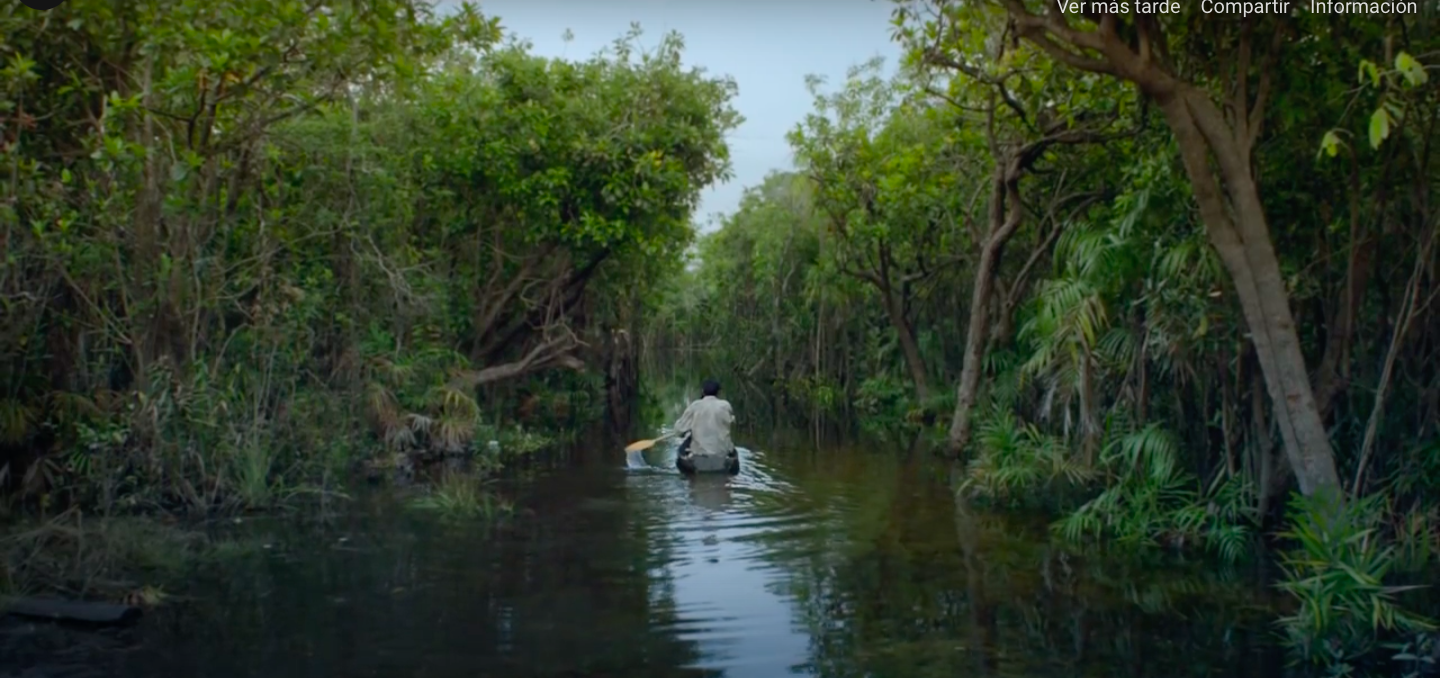
Strengthening Ancestral Cultures | Colombia
Sometimes the most relaxing place to travel is nowhere at all.
Senior Audiovisual Journalist | Investigative Journalist
Preserving Heritage Through Sustainable Development: The Piaroa Community and the IRACA® Program.
This documentary examines how Indigenous communities in Colombia work to preserve their ancestral cultures while navigating development and sustainability challenges.
In Colombia, Indigenous groups continue to strive to preserve their traditions and languages amid ongoing challenges. In collaboration with Social Prosperity and the Pan American Development Foundation (PADF), the Colombian government supports Afro-Colombian and Indigenous communities through the IRACA® program, a national initiative designed to foster comprehensive development while honoring cultural identity.
One such community is the Piaroas, located in the remote Serrapia region of Vichada. Historically isolated, the Piaroas rely entirely on the resources of the jungle and face systemic barriers in commercializing their crafts and sustaining livelihoods.
Through the IRACA® program, Social Prosperity, PADF, introduced an ecological system focused on food security and sustainable practices, empowering the Piaroas to improve their quality of life while protecting their ancestral way of living. Among the initiatives, solar-powered refrigerators were distributed to reduce environmental impact and extend product preservation.
The Colombian government has since implemented hundreds of complementary projects spanning health, education, housing, sanitation, income generation, environmental sustainability, and institutional strengthening, building a comprehensive, long-term support network.
These efforts formed part of broader development storytelling initiatives led by Social Prosperity, which reached over five million viewers across North and Latin America through institutional platforms and a PSA broadcast on Directv. Stories from these programs were also featured in international distribution, including Discovery Channel’s Hecho en Colombia, amplifying the visibility of Indigenous communities and sustainable development efforts on a global scale.

Günther Shaefer
Günther Shaefer
Investigative Journalist | Director | Producer
Photographer Günther Schaefer reflects on his career and the fall of the Berlin Wall during an afternoon interview in his Berlin apartment.
In the stylish ambiance of Günther Schaefer's Berlin flat, we spent an afternoon savoring coffee and cigarettes. A renowned photographer and offset printer, Schaefer's journey has taken him between Germany and the United States. Born in eastern Bavaria near the East German border, he made a pivotal move to Berlin in 1989 when the Wall came down.
Schaefer gained international acclaim for his black-and-white photographs capturing the fall of the Berlin Wall, most notably Vaterland at the East Side Gallery. As a founding member of the Künstlerinitiative in 1996, he played a crucial role in the creation of the East Side Gallery. Today, Berlin remains his muse, and his artistic legacy continues to shape the city's cultural landscape.