

A Nation Aflame

For months, the streets of Colombia were transformed into a sprawling stage for a historic social upheaval. What began as a strike against a proposed tax reform on April 28, 2021, quickly ignited a much deeper, long-standing fire: a breaking point for a society exhausted by decades of systemic inequality, unemployment, and corruption. Students, unionists, Indigenous, and Afro-Colombian activists led the charge, yet they were joined by thousands of ordinary citizens with no political affiliation, all united by a shared disillusionment with the government’s handling of the pandemic and the subsequent economic collapse.
This national strike followed a year of devastating COVID-19 lockdowns that exacerbated poverty and brought reports of government corruption to the surface. As the confrontations intensified among demonstrators, police, and criminal actors, the human cost became undeniable.


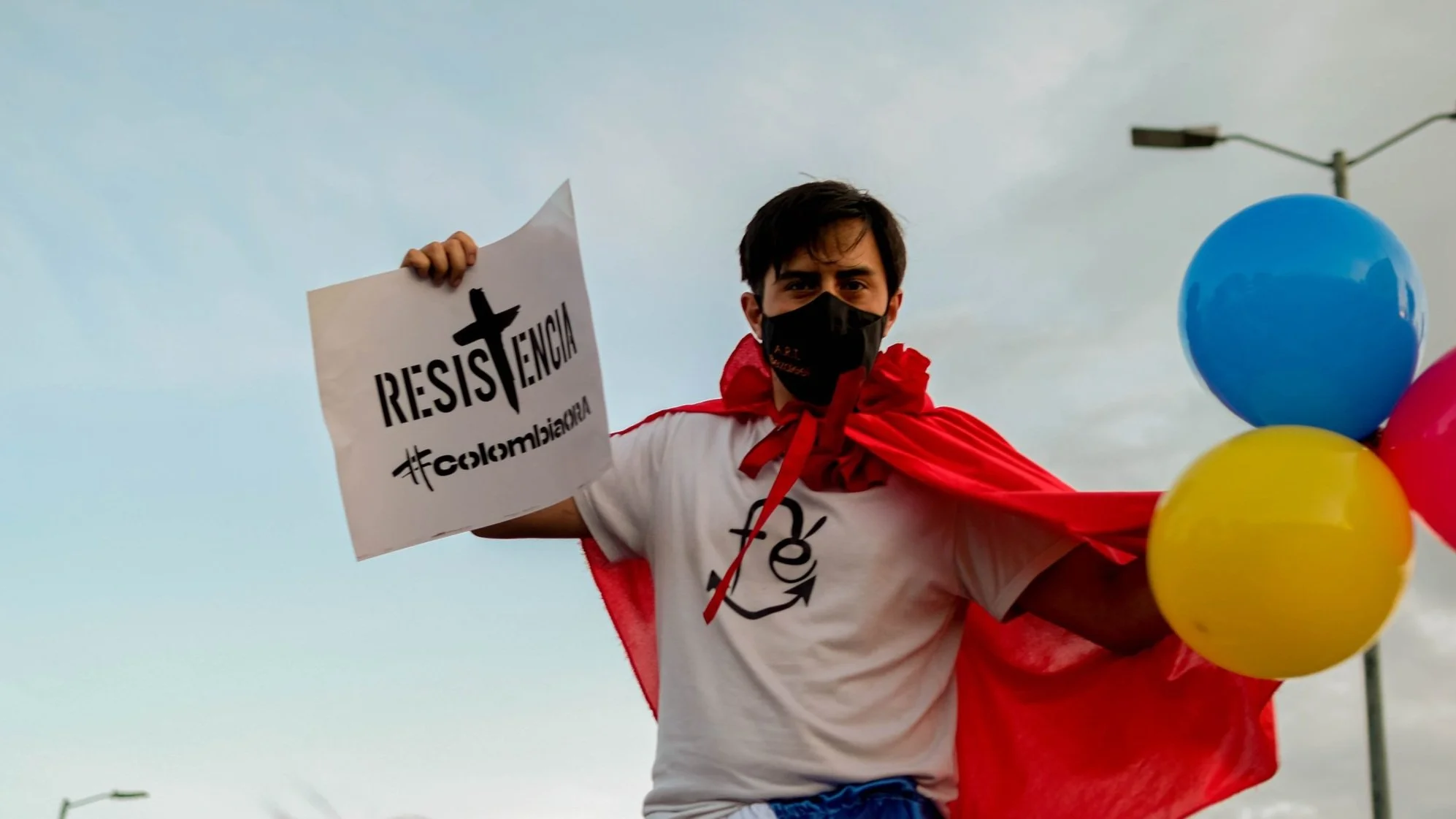
Two messages, one person: a sign reading “Resistance, #ColombiaOra” and a white t-shirt that says “Faith.”
Reports of police brutality and violent clashes resulted in an estimated 74 deaths and 111 missing persons, prompting urgent calls from the international community to uphold fundamental human rights. However, while much of the global focus remained on the official response, the complex role of organized crime within the movement and the ensuing economic crisis often remained overlooked.
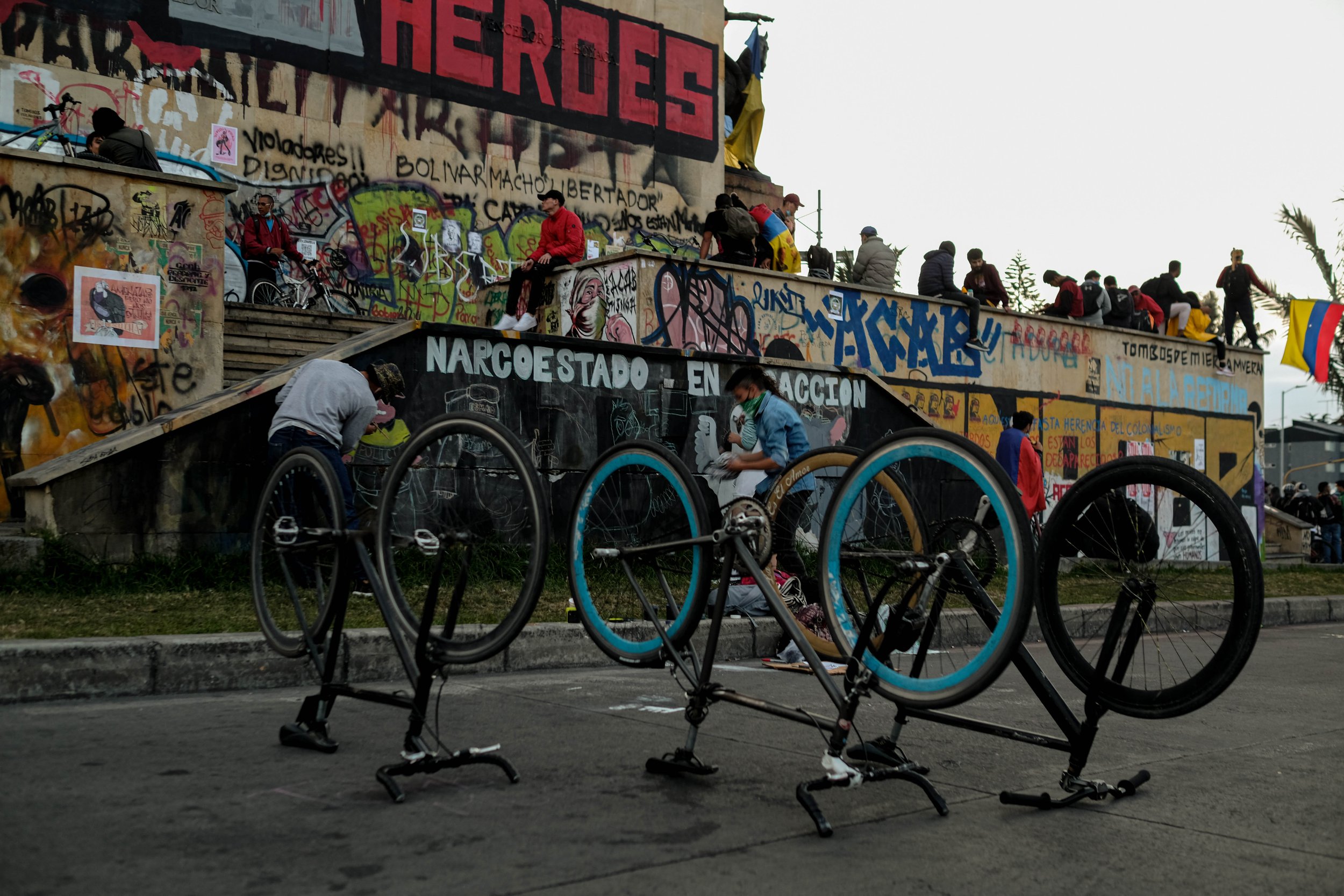

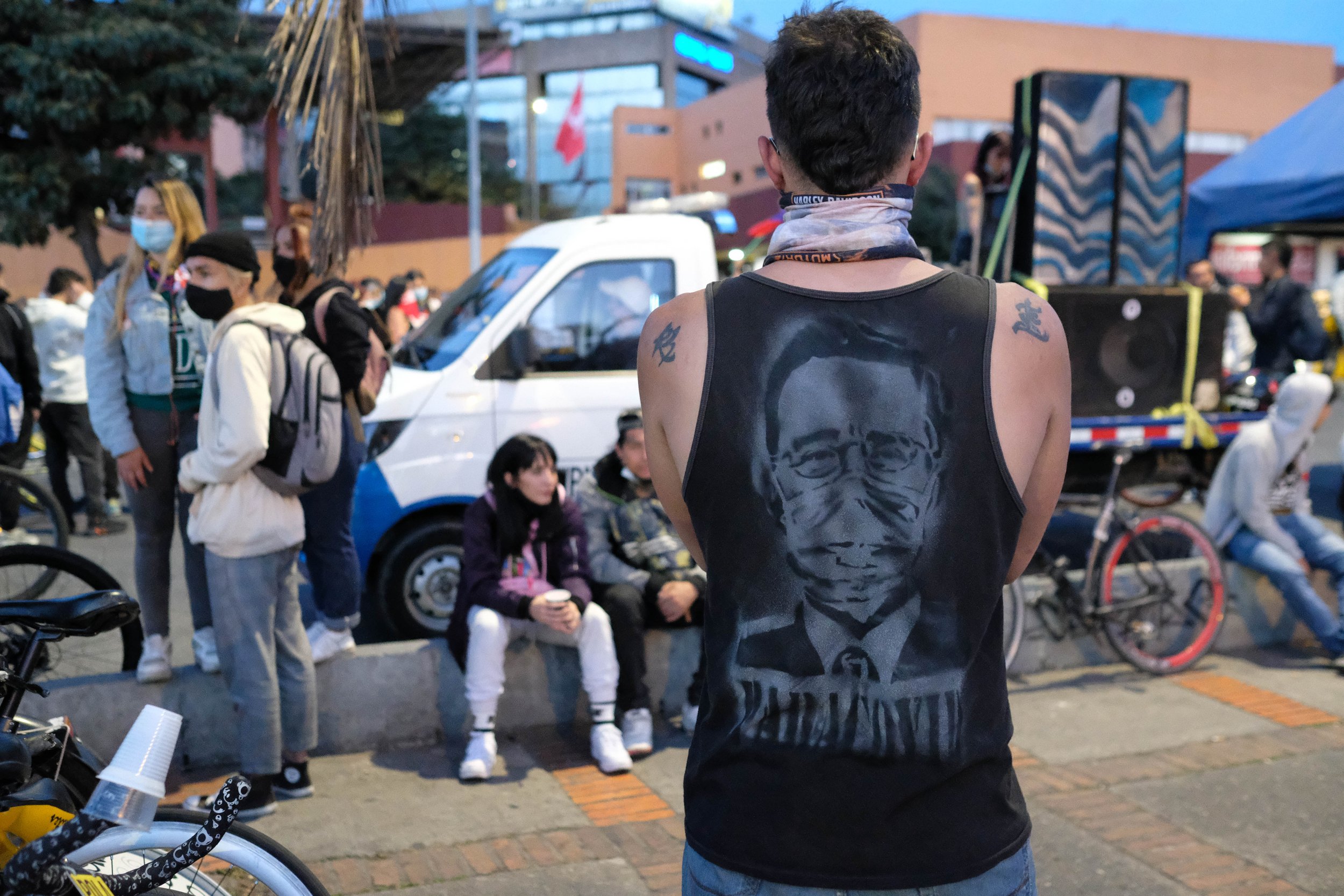
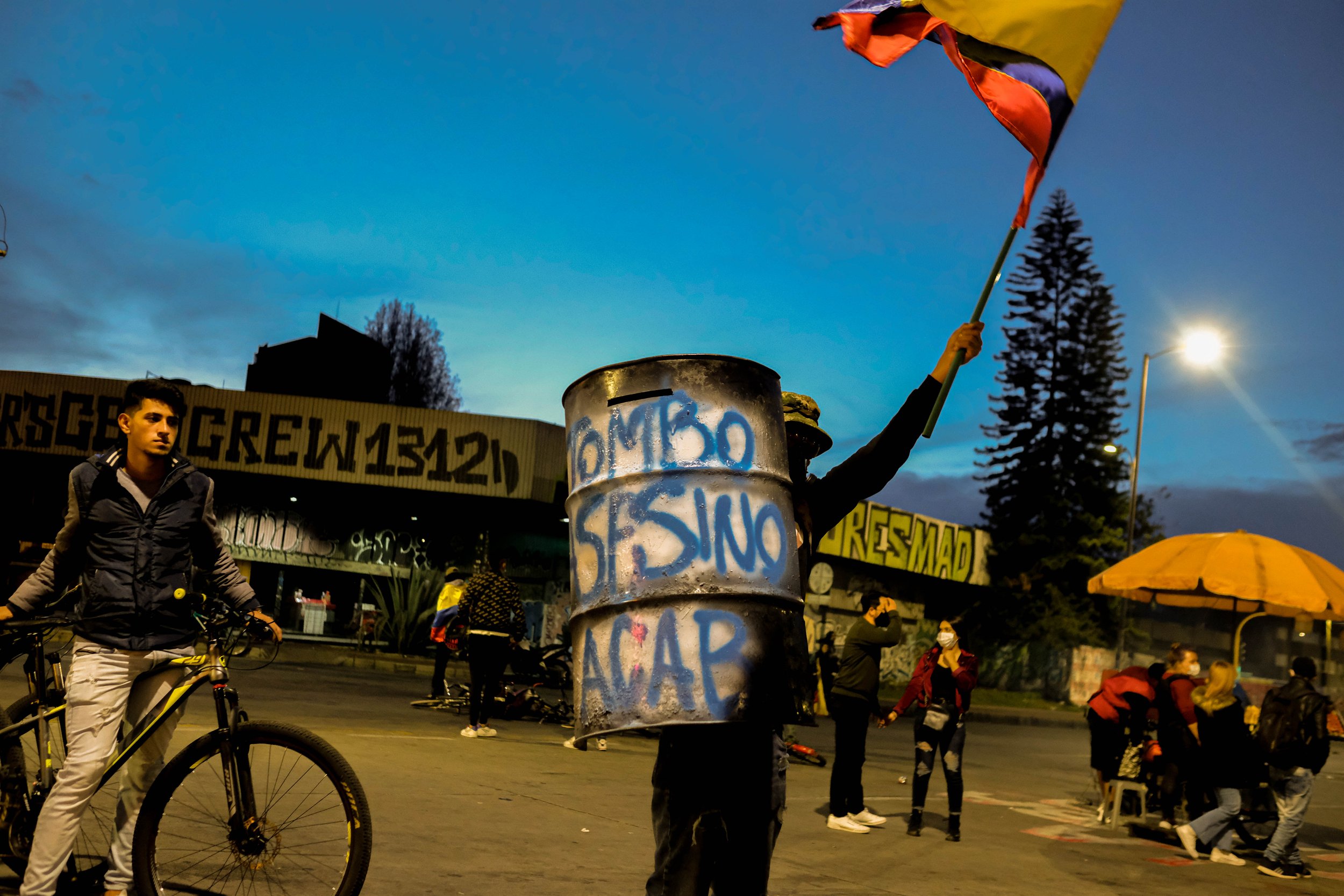
By mid-July, although the initial fervor of the strike had dissipated, the hope for change did not vanish; it evolved.

A woman draws in chalk on the ground, surrounded by graffiti, including the words “Public Enemy” and a skull painted above it.
In the absence of reliable political leaders, A Nation Aflame found its own path toward a new consciousness, proving that the demand for dignity is a fire that cannot be easily extinguished.
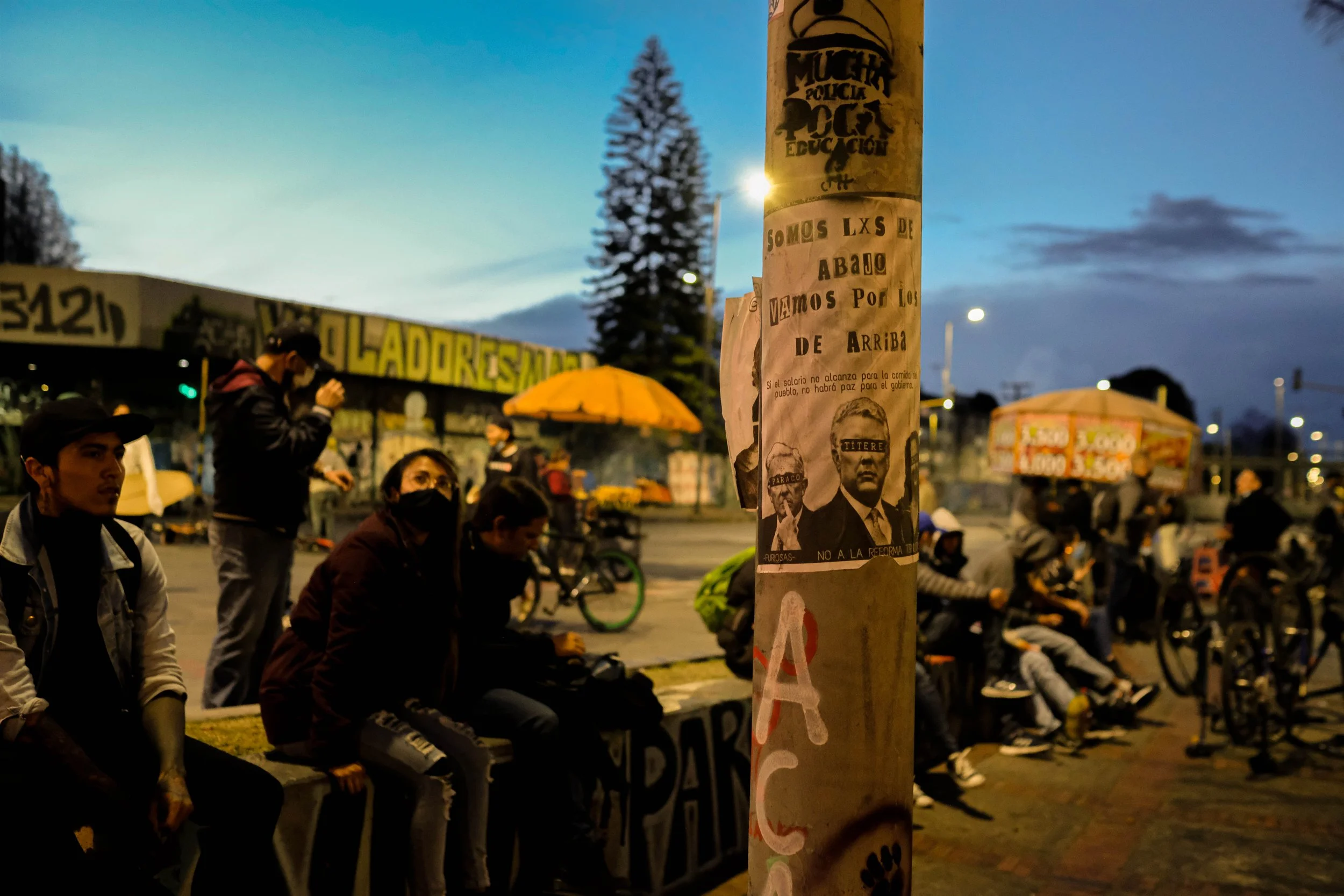
A poster on a pole reads “We are those from below, going after those above,” alongside images of Duque, labeled “Puppet,” and Uribe, labeled “Paramilitary,” both with black bands across their eyes.